When I’m consulting to my clients I often tell them that their users are telling them exactly what they want and our role is to simply direct them. No result pages and terrible relevancy are the results of failing at that.
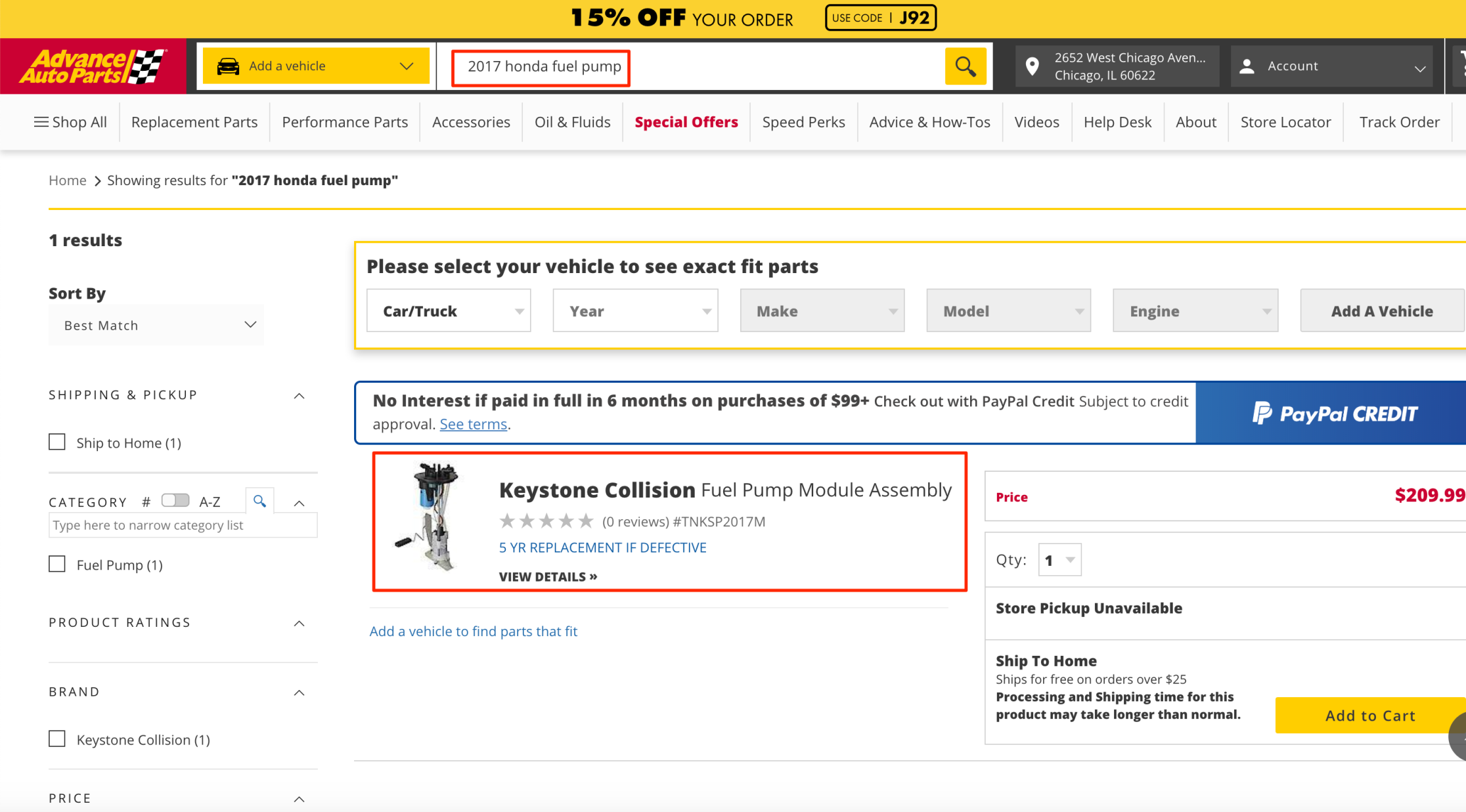
I’m looking for a “2017 Honda Fuel Pump”
If you shop online at Advanced Auto Parts website and enter these search terms, the best case would be that you think they do not have the product.
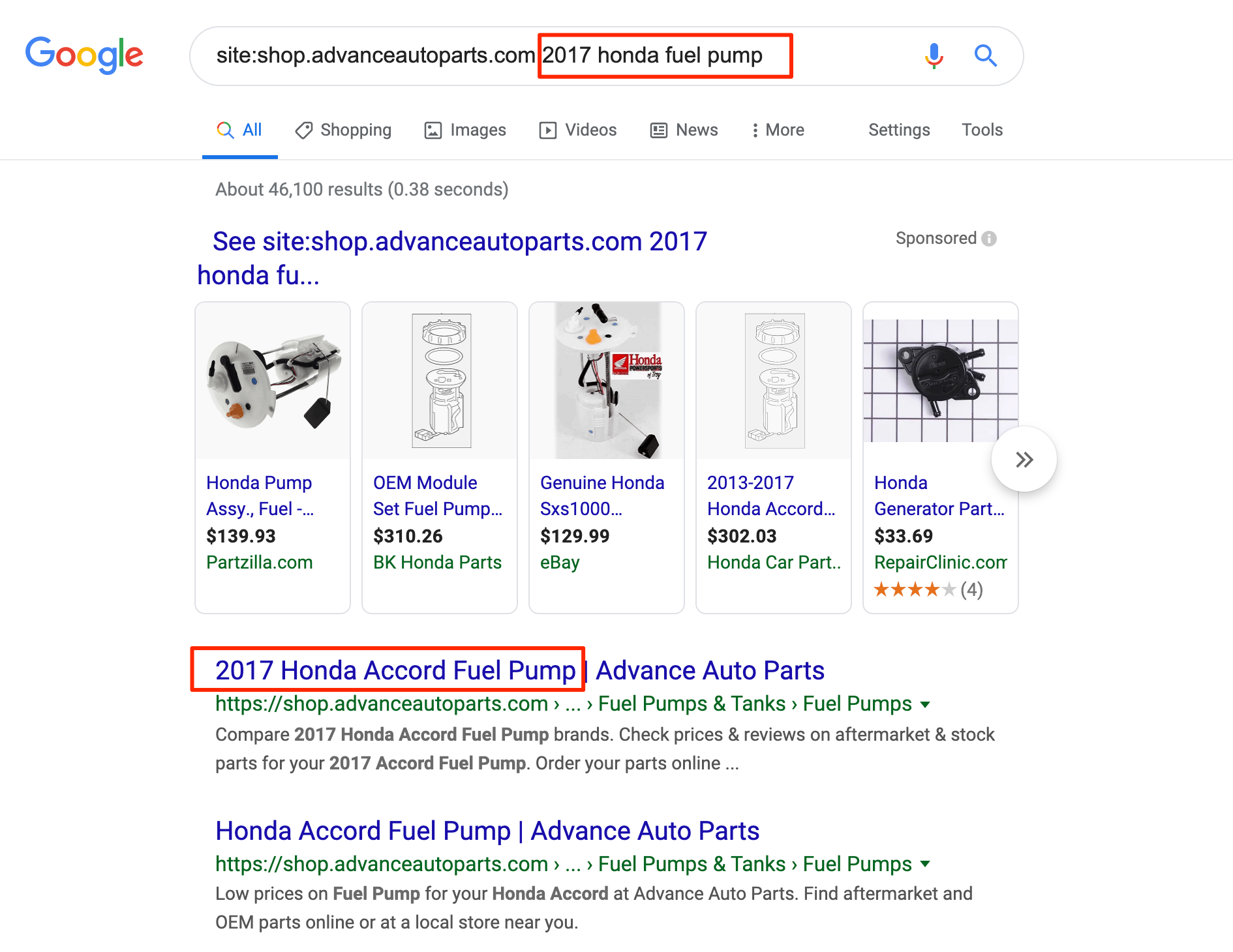
So you might go to Google and if you are a power user, you could check by using the site: parameter and you would see that they might have something close to what you are looking for. (You would also see competitors of Advanced Auto Parts.). What gives?
What gives indeed. Because there is simply no good reason for this. 10 years ago I switched an aftermarket eCommerce client from a DB based search to Solr and they achieved about a 200% improvement in conversions (3 something percent to almost 9 percent). All it took was to index their catalog and do some basic search tuning. Basic search engines can index product catalogs, category pages, fitment and provide an experience similar to Google. But that is not good enough to compete with the Amazon’s of the world. Today’s technology has evolved from basic search engines to next-generation search engines, called Insight Engines. These systems are using technologies such as Apache Spark with its Machine Learning libraries to propel eCommerce system to drive more revenue through increased click-throughs, add to carts, and upsell/cross-sell opportunities. Insight Engine capabilities include:
Automatic Query Rewriting
Based on past user behavior, the system reforms the query that the user enters into a better structured. This reduces the no results pages and improves click-through rates.
Intent Detection
The system can also classify the intent of the query. In my case, 2017 can be associated with a year, honda a model, and full pump a category. Given this, the system can be significantly more accurate than judging the number of times 2017 is on the webpage or the title.
Self tuning
Google has billions of end-users. But they lack your users. Your users and their use of the system is your new digital value. By analyzing how your successful sessions work, the system can tune itself for other users and create a hyper-personal experience.
Provide Recommendations
Do people typically by things in combination? Do they start looking for one thing but by another? Again, giving your users experiences you can create recommendations based on the parts, their relationships, and how people typically buy.
Your Users Clicks Are A Valuable Asset
The foundation of this is Machine Learning and AI. The training sets for these improvements are your users and what they did on your site. If you want to improve your conversions, all you need to do is listen to what your users are telling you what they want, by their queries and their clicks.